

The Small Towns of the San Luis Valley

- SLV Trading Post
- March 9, 2026
- Valley Guide
A Valley of Small Towns
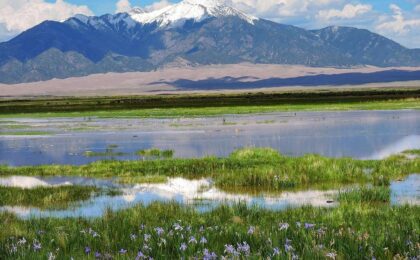
The San Luis Valley is one of the most unique regions in Colorado, not because of a single large city, but because of the many small towns that spread across its wide, open landscape. Sitting at more than 7,500 feet above sea level and surrounded by mountains on all sides, the valley is one of the largest high-altitude valleys in the world. From a distance it can feel vast and empty, but a closer look reveals something different: a network of small communities that have shaped life here for generations.
Unlike many parts of the country where everything revolves around one metropolitan center, the San Luis Valley functions more like a patchwork of towns, farms, and rural neighborhoods. Each community has its own identity, history, and role in the region. Some towns are built around agriculture. Others sit at the base of the mountains and serve as gateways to outdoor recreation. Some are historic railroad towns, while others grew out of farming settlements that have been here for more than a century.
Together, these towns form the backbone of life in the valley. People travel between them for work, school, groceries, events, and everyday errands. Over time, the boundaries between communities blur a bit. Someone might live outside Monte Vista, work in Alamosa, shop in Center, and spend weekends fishing near South Fork.
To understand the San Luis Valley, you really have to understand its towns.
“Each community has its own identity, history, and role in the region.”
Alamosa – The Valley’s Hub
Alamosa is often considered the central hub of the San Luis Valley. While it’s still a small town by most standards, it plays a major role in the daily life of the region.
Located near the center of the valley, Alamosa is where many people from surrounding communities go for shopping, healthcare, and services. The town is home to the largest concentration of stores, restaurants, and professional offices in the valley. Regional medical facilities, government offices, and many local businesses are also based here.
One of Alamosa’s defining features is Adams State University. The university brings students, faculty, and cultural events into the community and helps give the town an energy that’s a little different from some of the more rural areas nearby. College sports, public lectures, theater productions, and community events all add to the local atmosphere.
Because of its central location and services, many residents from across the valley regularly make trips into Alamosa. Whether it’s for groceries, medical appointments, or a night out to eat, the town serves as an important meeting point for the wider region.
“Alamosa is often considered the central hub of the San Luis Valley.”
Monte Vista – Agriculture and Crane Country
Just a short drive west of Alamosa sits Monte Vista, a community deeply connected to the agricultural traditions of the San Luis Valley.
Farming has long been the backbone of this part of Colorado, and Monte Vista sits right in the middle of some of the valley’s most productive farmland. Fields of potatoes, barley, and other crops stretch across the landscape, supported by irrigation systems that have been in place for generations.
Monte Vista is perhaps best known beyond the valley for the annual sandhill crane migration. Every spring, thousands of these large birds stop in the area as they travel north, turning nearby wetlands and fields into one of the most remarkable wildlife spectacles in the region. The event draws visitors, photographers, and bird watchers from across the country.
But for locals, Monte Vista is first and foremost a working agricultural town. Equipment dealerships, farm supply stores, grain elevators, and processing facilities all reflect the community’s strong ties to farming. The rhythms of planting and harvest still shape much of life here.
“Monte Vista is perhaps best known beyond the valley for the annual sandhill crane migration.”
Del Norte – Historic Gateway to the Mountains
Further west along the Rio Grande sits Del Norte, one of the valley’s older towns with deep historical roots.
Founded in the late 1800s, Del Norte once served as an important transportation and supply point for travelers heading into the San Juan Mountains. Its historic downtown still reflects that earlier era, with older buildings lining Grand Avenue and giving the town a character that feels tied to its past.
The Rio Grande runs nearby, and the surrounding landscape begins to rise as the valley transitions toward the mountains. Because of its location, Del Norte has long been considered a gateway to outdoor recreation. From here, travelers can head west into the San Juan Mountains for hiking, camping, fishing, and hunting.
Today, Del Norte maintains its small-town feel while continuing to serve as a link between the valley floor and the mountains beyond.
“Because of its location, Del Norte has long been considered a gateway to outdoor recreation.”
Center – Heart of the Valley’s Farming Industry
If Monte Vista represents the agricultural heritage of the valley, Center represents its agricultural power.
Located near the geographic middle of the San Luis Valley, Center sits in the heart of one of the most productive farming areas in Colorado. Large agricultural operations surround the town, and the area is especially well known for its potato production. In fact, the San Luis Valley is one of the largest potato-growing regions in the country.
Trucks hauling crops, grain storage facilities, and farm equipment are common sights around Center. The local economy is closely tied to agriculture, from farming itself to processing and distribution.
While the town itself remains small, its impact on the valley’s agricultural economy is significant. For many people in the region, Center represents the working core of the valley’s farming industry.
“…Center sits in the heart of one of the most productive farming areas in Colorado.”
South Fork – Gateway to Outdoor Adventure
At the eastern edge of the San Juan Mountains lies South Fork, a small mountain community that feels a little different from the towns out on the valley floor.
South Fork sits where the Rio Grande begins its journey out of the mountains and into the valley. Surrounded by forests and peaks, the area is known for its outdoor recreation. Fishing on the Rio Grande is popular here, and nearby public lands provide opportunities for hiking, camping, hunting, and wildlife viewing.
One of South Fork’s most recognizable landmarks is Wolf Creek Pass, which rises west of town and connects the valley to southwestern Colorado. The pass is famous for its deep winter snow and access to Wolf Creek Ski Area, drawing skiers and travelers through the community each year.
Because of its location and scenery, South Fork often serves as a basecamp for people exploring the surrounding mountains.
“Surrounded by forests and peaks, the area is known for its outdoor recreation.”
Antonito – A Town with Railroad History
Near the southern edge of the valley, close to the New Mexico border, sits the historic town of Antonito.
Antonito is perhaps best known as the starting point of the Cumbres & Toltec Scenic Railroad, a narrow-gauge railway that travels through mountain passes between Colorado and New Mexico. The train follows a route originally built in the late 1800s and today operates as a heritage railroad, carrying visitors through some of the most dramatic landscapes in the region.
Beyond the railroad, Antonito remains a quiet rural community with deep historical roots in the valley. Many families in the area trace their heritage back generations, reflecting the long history of settlement in southern Colorado and northern New Mexico.
The town’s slower pace and historic character give it a unique place in the broader story of the San Luis Valley.
“…Cumbres & Toltec Scenic Railroad, a narrow-gauge railway that travels through mountain passes between Colorado and New Mexico.”
Other Communities Across the Valley
While a handful of towns often get the most attention, many smaller communities help shape life across the San Luis Valley. Here are only a few:
La Jara sits just north of Antonito and has long been tied to farming and ranching. The town serves as a local center for surrounding rural communities.
Sanford, located a short distance away, is another agricultural town where farming remains central to daily life.
Saguache, on the northern side of the valley, is one of the region’s older settlements and has developed a reputation as a small arts and cultural hub in recent years.
Creede, tucked high in the mountains at the head of the Rio Grande, has a very different feel from most valley towns. Once a booming silver mining town, Creede today is known for its dramatic canyon setting and its historic theater scene.
Each of these communities contributes something unique to the region’s identity.
“Each of these communities contributes something unique to the region’s identity.”
Life Between the Towns
While towns anchor the valley, much of life in the San Luis Valley actually takes place between them.
Farms, ranches, and rural homes spread across the open landscape that stretches for miles in every direction. Many residents live outside town limits, often on land that has been in their families for generations.
Despite the distances, the communities remain closely connected. School districts, local events, county fairs, and high school sports bring people together from across the region. It’s common for someone to know people in multiple towns, with family ties and friendships stretching across the valley.
The result is a region that feels both spread out and tightly connected at the same time.
“Many residents live outside town limits, often on land that has been in their families for generations.”
A Region Defined by Its Communities
The San Luis Valley is shaped as much by its people as it is by its landscape. The mountains, fields, and wide skies are part of the story, but the towns scattered across the valley are what truly give the region its character.
Each community — from Alamosa to Antonito, from Monte Vista to Saguache — represents a piece of the valley’s history and way of life. Together they form a network of places where people work, raise families, and build communities that often span generations.
For newcomers, exploring these towns is one of the best ways to understand the valley. And for longtime residents, they are simply part of everyday life.
Platforms like SLV Trading Post exist to help connect these communities online — making it easier for people across the valley to find local businesses, share opportunities, and stay connected to what’s happening around them.
In a region built on small towns and close-knit communities, those connections matter.
“The San Luis Valley is shaped as much by its people as it is by its landscape.”
Hannah Begley
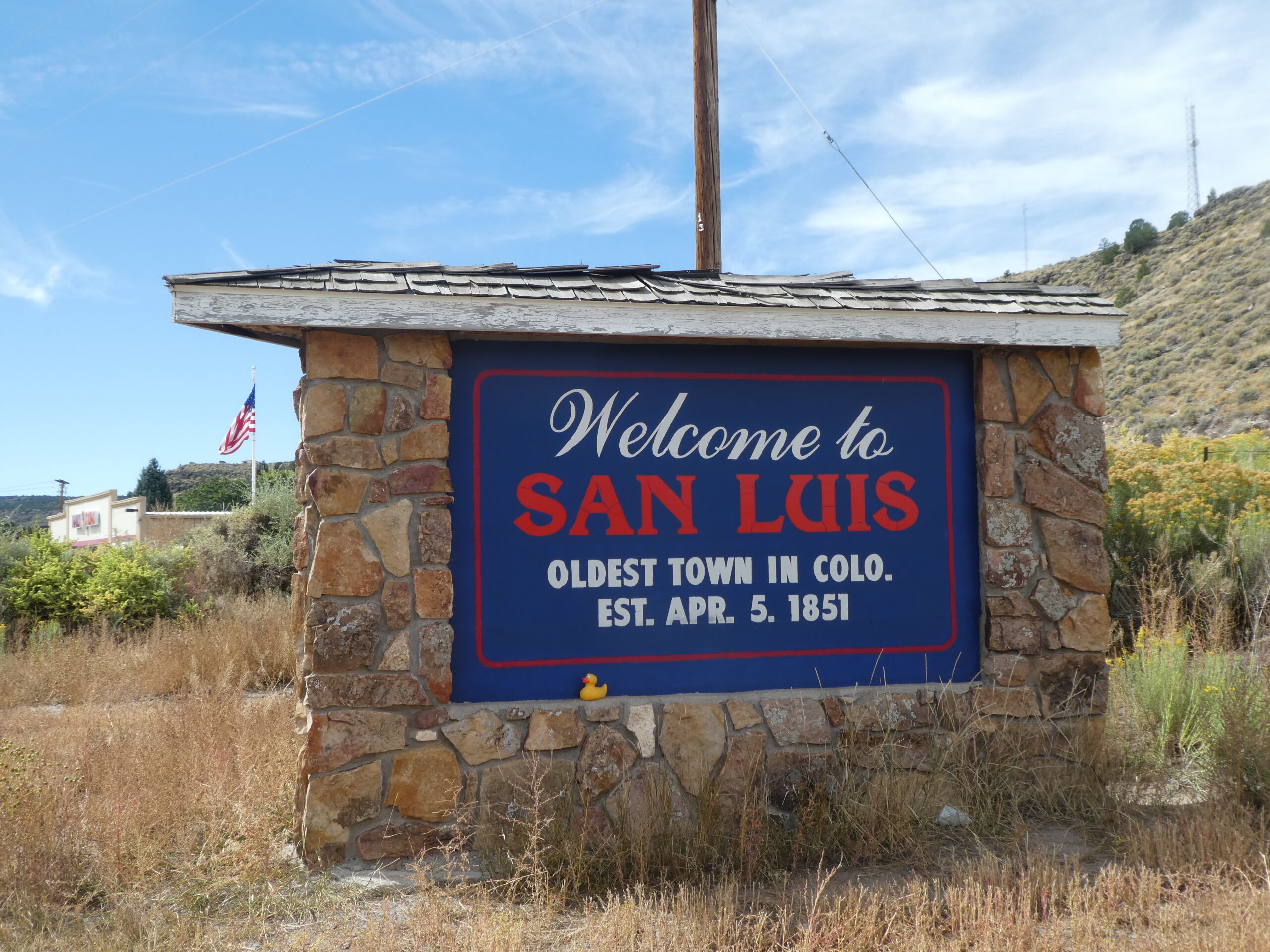
March 24, 2026Great job, it’s a very interesting article! LOL, nice duckie on the San Luis welcome sign.